
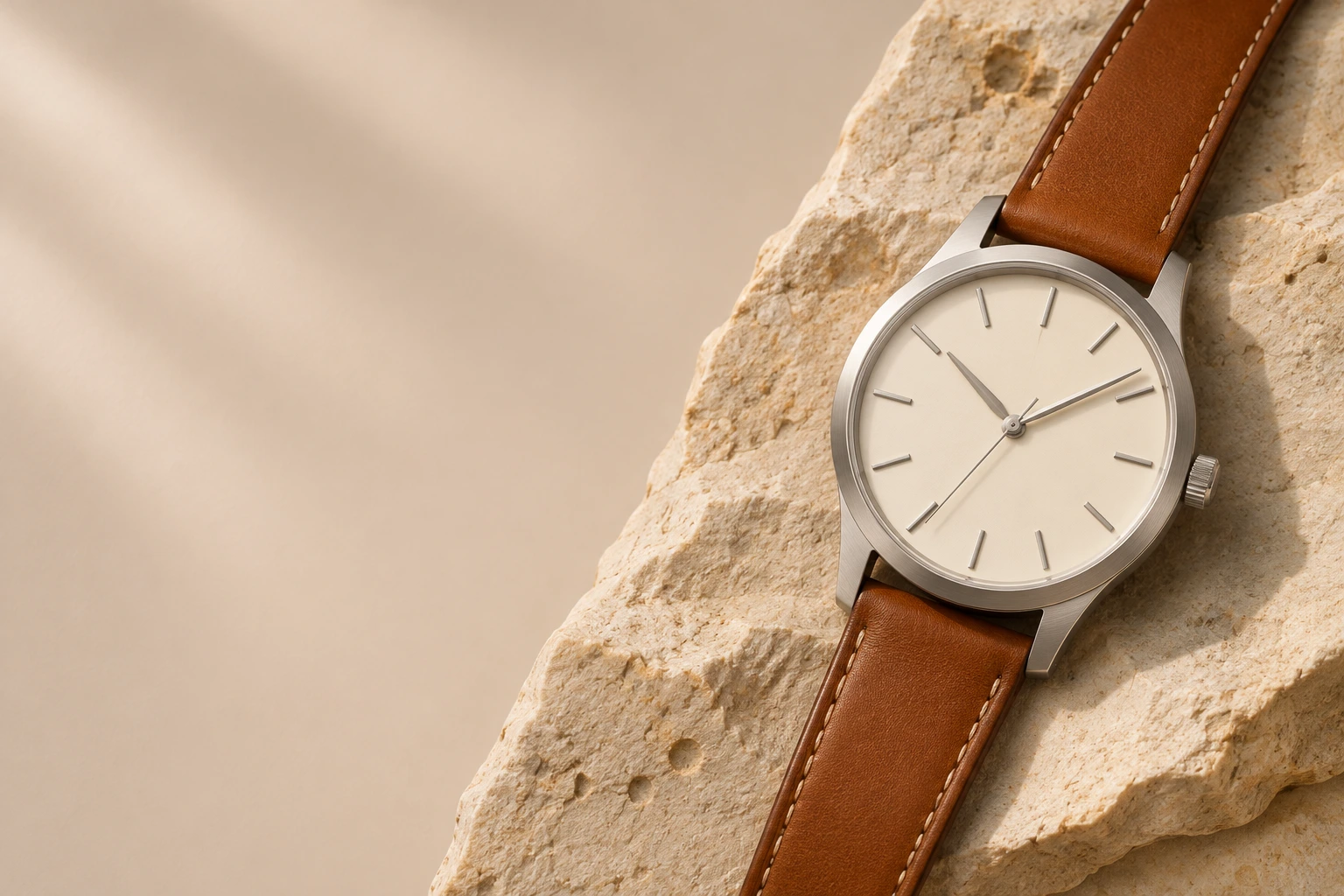
Begin with the role, not the watch
A watch wardrobe is a small system of roles, not a shopping list. Before choosing dials or bracelets, decide which parts of your week need a watch: work, weekends, evenings, travel. Many roles overlap, so one piece can often serve two. At TENSEAMEET, a store for minimal, unbranded styles, the useful question is not which watch looks most impressive but which watch makes the day easier to dress for.
Keep the core small
Most people need fewer watches than they expect. A considered rotation often has three or four pieces: an everyday watch, a quieter alternative, something suitable for more formal dressing, and perhaps a travel-friendly option. If two watches serve the same role, ask what each does better. If the answer is nothing, one can go. Use a simple check: if you removed a watch, would your options collapse? If not, it may be redundant. A small core makes each purchase easier to justify because every piece has a job.
Anchor the wardrobe with a round bracelet watch
A round case on a bracelet is one of the most adaptable shapes in a minimal wardrobe. It reads cleanly with tailoring, knitwear, shirts, and casual jackets, and can move from office to dinner without asking for attention. Look for a clear dial, a balanced case, and a bracelet that feels intentional rather than busy. TENSEAMEET’s round bracelet styles are a practical starting point if you want one piece to carry several days of the week.
Wear it with a shirt cuff sitting just above the watch, or against bare skin in warmer weather. Avoid forcing it under a tight sleeve; comfort is part of looking considered. If your week is mostly casual, this can be your default. If it is more formal, the same watch can bridge suits and relaxed evenings.
Use mesh for quieter moments
Mesh watches offer a different register: quieter, lighter, and less visually segmented than a link bracelet. They suit warm weather, short sleeves, and outfits where a watch should feel present but not dominant. A mesh strap can make a simple dial feel more fluid, which helps when your clothing is already textured or patterned. TENSEAMEET’s mesh watches are worth considering as a second piece, especially if your everyday watch already has a bracelet.
Keep the rest of the wrist simple. A mesh watch rarely needs a second bracelet. If you wear rings, choose one focal point and let the watch be the other. In warmer months, mesh can replace a leather strap when leather feels too heavy for the day.
Make dials and straps work as a system
Coherence matters more than variety. Choose a small dial palette—one light, one dark, one muted—and let straps support it. A white or silver-tone dial tends to feel crisp and formal; a black or deep-toned dial feels grounded and evening-ready; a soft neutral can bridge both. These are not rules. Avoid buying two watches that compete for the same outfit.
- If your clothes are mostly navy, gray, and white, a light and a dark dial cover most situations.
- If you wear earth tones, a warm neutral dial may integrate more naturally than stark black or white.
- If you want one watch for everything, choose the dial that disappears most easily into your wardrobe.
- If you wear gold and silver jewelry, decide whether the watch should match or contrast; either can work if the choice is consistent.
Straps change the register quickly. A bracelet feels structured, mesh feels lighter, and a simple strap can make the same watch feel more relaxed. Treat straps as part of the wardrobe, not an afterthought.
Build around your actual week
Style advice matters only when it meets real life. Map your week honestly: how many days require a polished look, how many are casual, and how many involve travel or long days away. If most of your week is casual, a round bracelet watch may be the anchor and a mesh watch the lighter alternative. If you move between meetings and informal dinners, choose pieces that do not need to be changed at six. For travel, favor watches that work with several outfits and pack simply. For weekends, let comfort lead.
Edit, wear, and revisit
A watch wardrobe improves through use. Wear each piece for a week and notice when it feels wrong: too formal for the day, too casual for the evening, or simply not you. Keep a short note of the gaps. That note is more useful than a wish list because it tells you which role is missing rather than which style is trending.
Care is part of consideration. Store watches separately, wipe them with a soft cloth after wear, and clean bracelets and mesh gently when they look dull. Finally, revisit the wardrobe when your routine changes. If you are unsure which role to fill next, contact TENSEAMEET with a description of your week and the styles you already wear. The goal is not more watches; it is a small, coherent set that makes dressing feel simpler.