
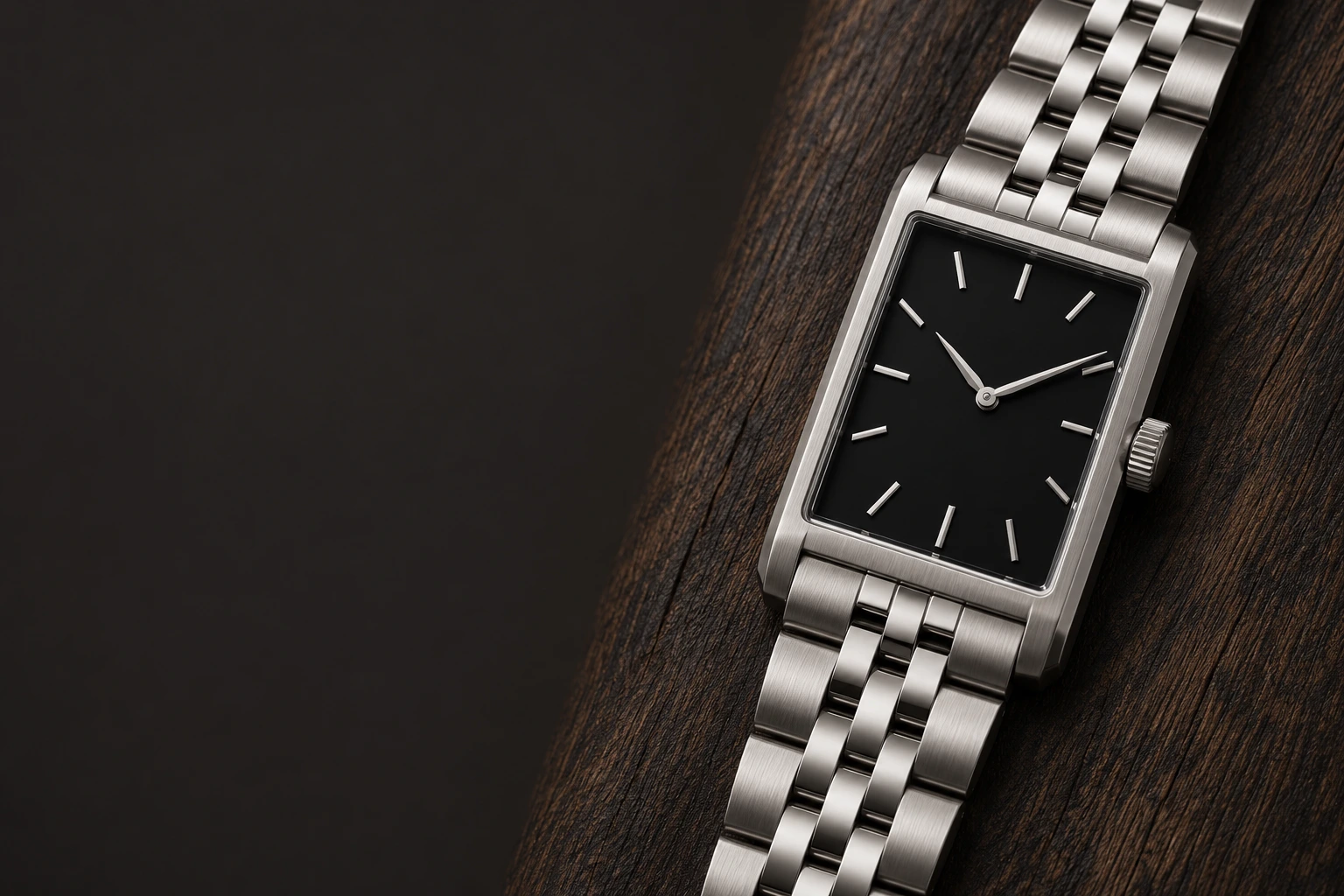
A minimal watch should feel easy to live with, not fragile. Yet care advice often swings between vague reassurance and overly technical rules. This guide offers a practical middle path: simple habits, sensible storage, and clear points at which to check product information or ask the store. TENSEAMEET is a store for minimal, unbranded fashion watches. The aim is not to baby a watch, but to reduce avoidable wear and keep it looking intentional.
Start with a two-minute daily habit
At the end of the day, wipe the watch with a soft, dry cloth. Pay attention to the back of the case, the edges of the crystal, and the inner curve of the strap. This removes skin oils, dust, and lotion residue before they settle into seams or clasp areas. You do not need a special kit for this. A clean microfiber cloth is usually enough, provided it is free of grit. Avoid paper towels, rough sponges, and abrasive cloths, which can leave fine marks on polished surfaces. If debris is visible around the lugs or clasp, use a soft dry brush lightly; do not poke at gaps with sharp tools. Consistency matters more than occasional deep cleaning.
Clean the case without overdoing it
Case and crystal collect fingerprints in normal use. Start dry, because many marks are only surface film. A clean microfiber cloth used in gentle circles will handle most everyday smudges. If a mark persists, follow the care instructions supplied with the watch rather than reaching for household cleaners, solvents, polish, or abrasive pastes. Those products can be too aggressive for plated finishes, coated surfaces, or printed details. For ceramic-style watches, check the care notes for the specific piece before using any cleaner, since surface finishes can vary. Browse the ceramic-style collection to identify the finish you own, then keep cleaning simple. The goal is to remove film, not to scrub the watch into looking new.
Match strap care to the strap style
Straps age differently, so care should follow the style rather than a single rule. Mesh-style bracelets have small gaps and a clasp area where dust and skin residue can collect. A soft dry brush along the surface, followed by a gentle wipe after wear, can help keep the texture looking clear. Before using moisture or any cleaning product, check the product guidance; do not assume that a method used on one strap is suitable for another. The mesh watches category is a useful reference for the look, but the exact care still depends on the piece. If your watch has a leather, fabric, or coated strap, keep it away from prolonged moisture and harsh products unless the product information explicitly permits otherwise. Clasps and buckles deserve attention because they touch desks, bags, and surfaces throughout the day.
Store it where it can rest
Storage is less about display than about reducing pressure and contact. Keep watches in a dry, dust-free place away from direct sun and heat. If you use a watch box, leave a little space between pieces so that clasps and cases do not press against each other. Do not pile watches into a drawer with keys, coins, or loose jewelry. For daily wear, a soft pouch is often enough, especially if the watch is rotated regularly. If you plan to store a watch for several weeks, clean it first, let it air briefly, and close it away without trapping damp cloths or packaging. A calm storage routine prevents many small marks before they happen.
Adjust fit before discomfort becomes damage
A watch that slides constantly can knock against desks and doorways, while one that is too tight can leave marks and stress the clasp. Aim for a fit that stays in place without pressing into the wrist. Because fit depends on wrist shape, strap style, and even climate, check adjustments at different times of day rather than deciding once. For mesh bracelets, make changes in small steps and check that the clasp sits flat after each adjustment. If a strap feels sharp or a clasp does not close cleanly, stop wearing it and seek appropriate help. Fit is a comfort issue, but it is also a care issue: a stable watch meets fewer surfaces.
Use a seasonal check-in and ask when unsure
Once a season, look over your watch in good light. Check for buildup around edges, stiffness in the strap, or a clasp that no longer sits flat. Address small issues early rather than waiting for them to become habits. If a part feels loose, sharp, or inconsistent, do not force it or use household tools unless you know the correct procedure. For repairs or professional service, use a qualified watch repairer. If you are unsure how to clean a finish, whether a strap can be adjusted at home, or how to store a particular style, ask before trying. Contact TENSEAMEET through the contact page for product-specific guidance. Everyday care should feel measured, not mysterious: a soft cloth, a sensible resting place, a secure fit, and the willingness to ask when the answer is not obvious.