
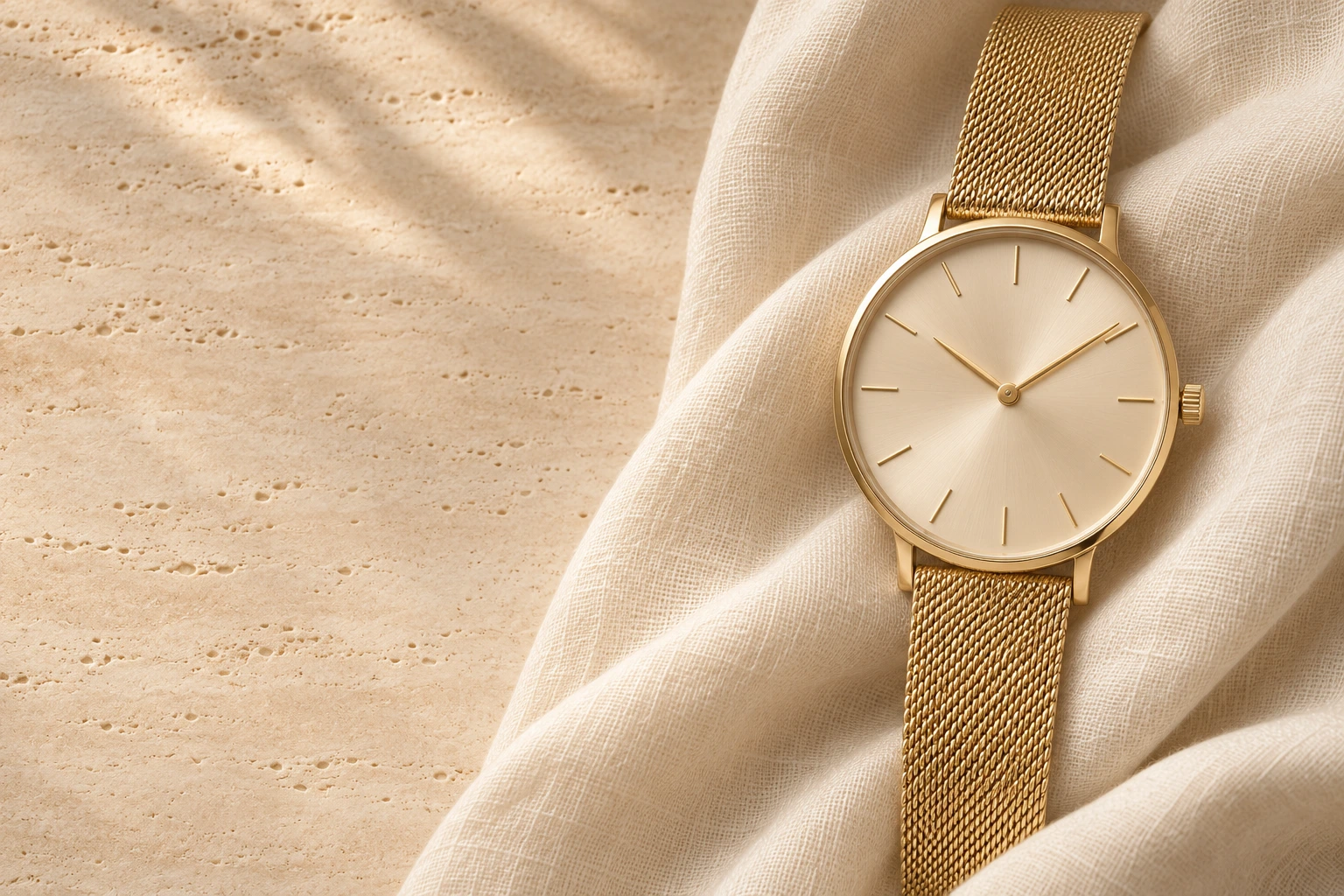
Start With the Wrist, Not the Watch
Watch proportions are relational. A case that looks balanced in a photograph can feel heavy on a narrow wrist, while a smaller case can disappear under a shirt cuff. Before comparing styles, consider wrist width, wrist shape, and the sleeve you wear most. A flat, broad wrist usually carries visual mass more easily; a rounder or narrower wrist may suit a more compact profile. These are tendencies, not rules. The aim is not to follow a universal size chart but to find a watch that sits within the natural lines of your arm.
Hold a candidate against the wrist in daylight and look from a short distance, not only straight down. The case should neither dominate the arm nor look lost. If you are between two options, favor the one that leaves a little breathing room around the case. TENSEAMEET’s round leather watches are a straightforward place to begin if you want a familiar, versatile silhouette.
Case Shape Changes the Perceived Size
Round and rectangular cases do not read the same way, even when their overall footprint is similar. A round case distributes visual weight evenly and tends to feel softer and more casual. A rectangular case can follow the wrist more closely on some arms and often looks sharper, more architectural, or more formal. A cushion or tonneau shape may sit between the two. Match the shape to the impression you want, not only to today’s outfit.
Rectangular watches can work well when the case stays narrow relative to the wrist, because straight lines create a clear edge without adding bulk. Round watches are often more forgiving across wrist shapes. Compare both on the same wrist before deciding. For a more graphic, dress-oriented look, explore rectangular leather watches.
Lug-to-Lug Span Is the Hidden Proportion
The distance from one lug tip to the other often matters more than case width. If the lugs extend beyond the flat part of the wrist, a watch can look oversized even when the case is modest. If they stop well short, it may look undersized. Look for a span that follows the wrist without overhanging. This check is especially useful on smaller wrists or where the wrist bone is pronounced.
Also inspect how the strap meets the case. A wide, sharp lug line creates a more technical impression; a slimmer line looks quieter. Neither is better, but the transition should feel intentional. Move your hand and check whether the lugs press into the wrist or float above it. Comfort and proportion usually agree.
Balance Thickness and Dial Density
Thickness affects how a watch works with clothing. A slim profile slides under a cuff and reads as understated. A thicker case has more presence and may suit open collars, short sleeves, and casual layers. This is a use-case decision: a watch worn mostly at a desk may benefit from a lower profile, while a weekend watch can carry more visual weight. Do not assume thinner is always more elegant or thicker is always more sporty.
A dial can also make a watch feel larger or smaller without changing the case. Broad empty space, thin markers, and low contrast make a watch look calmer and often more compact. Dense numerals, thick hands, strong color blocks, and multiple subdials add visual weight. A date window adds a small focal point, which may be welcome or may tip a busy dial over the edge. Judge the dial as a whole from a normal viewing distance.
Strap Width, Taper, and Color
The strap is part of the proportion. A wide strap makes the case feel more grounded; a narrow strap makes it feel lighter and more formal. Taper, the change in width from lug to buckle, affects that impression too. A strong taper can make a watch look dressier, while a straight strap can feel more casual and stable. Color matters: a strap close to your skin tone may soften the watch, while a contrasting strap draws attention to the case.
For a first minimal watch, choose a strap width that looks continuous with the lugs rather than noticeably wider or narrower. Check the buckle area as well, since a bulky buckle can undermine an otherwise clean profile. If you wear the watch daily, choose a color that works with the shoes and belts you actually wear.
A Practical Try-On Checklist
- View the watch from arm’s length, then close up.
- Check that the lugs do not overhang the flat wrist.
- Move your hand and wrist to check pressure and balance.
- Wear the sleeve you wear most often.
- Compare round and rectangular shapes on the same wrist.
- Decide whether the dial feels calm or busy at a glance.
- Confirm the strap width looks proportional to the case.
Proportion is personal, but it is not mysterious. It comes from the relationship between case, wrist, dial, strap, and clothing. Compare rather than rushing toward a familiar size. If you need help thinking through a choice, contact TENSEAMEET with details about your wrist, the styles you are considering, and how you plan to wear the watch. The store can help you compare options; a watch should feel considered on your wrist, not simply correct on paper.